Pantanal Wetland Birds
A Global Ornithological Haven

The Avian Kingdom
of South America.

With over 650 identified species, the open mosaic of the Brazilian Pantanal provides an unrivaled birding experience where exotic plumage and monumental nests thrive in full view.
Unmatched Biodiversity

Why Birdwatch in the Pantanal?

Unlike dense rain forests where birders frequently listen to canopy calls hidden beneath thick foliage, the Pantanal’s vast savanna-marsh landscape offers open vistas. Waterfowl, raptors, and brightly colored forest birds feed along receding wetlands and riverbanks, enabling effortless photography, behavioral observations, and stress-free birding walks.

Iconic Residents

Signature Species of Mato Grosso

Detailed profiles on lifestyle patterns, diet, behaviors, and prime tracking seasons.

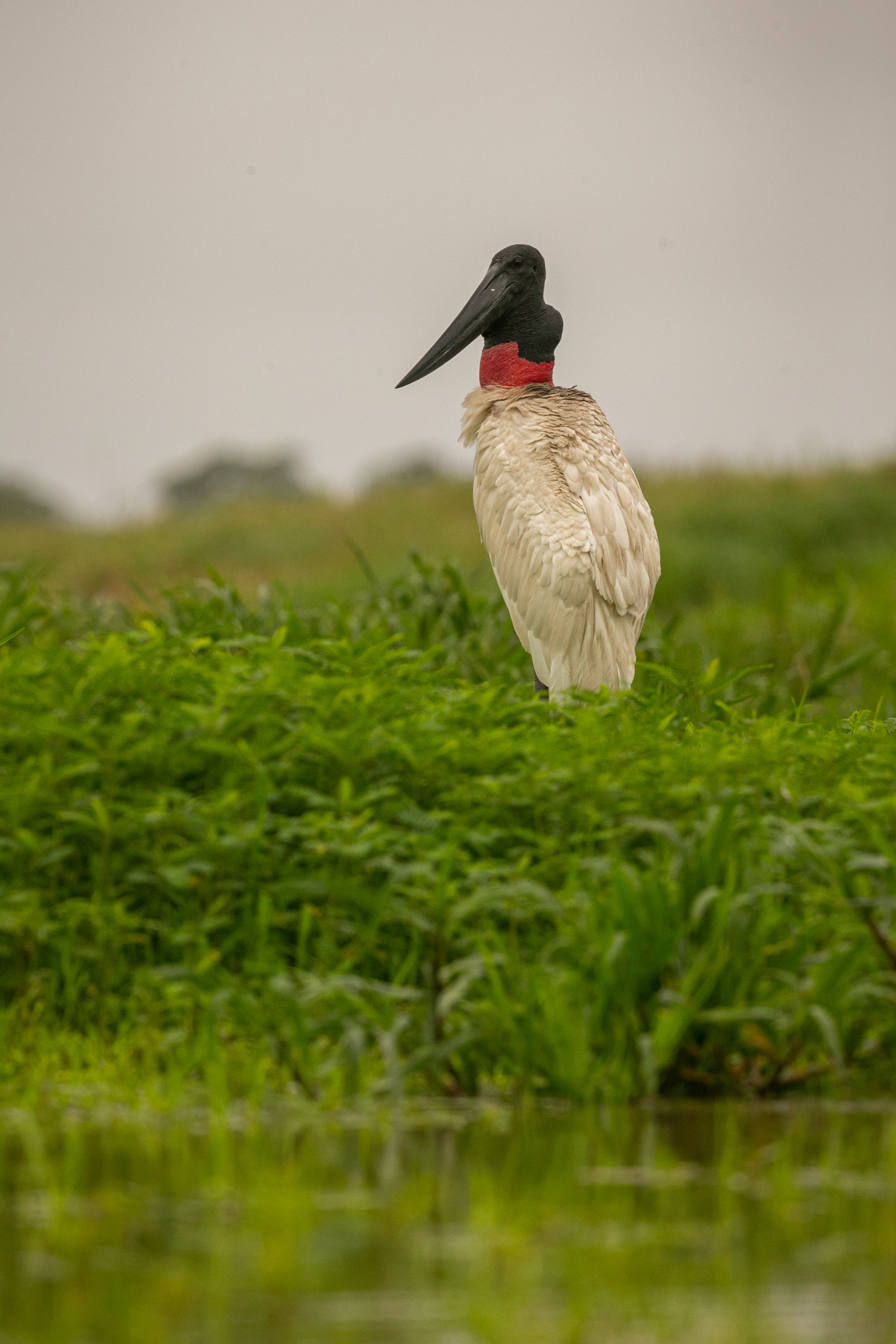
Jabiru Stork Tuiuiú
Pantanal Emblematic Symbol Jabiru mycteria

Tuiuiú (Jabiru Stork)

Standing up to 1.4 meters (nearly 5 feet) tall with a wingspan exceeding 2.8 meters, the Tuiuiú is the undisputed aerial king of the wetlands. Famous for its massive head, white plumage, black featherless neck, and vibrant red expandable throat pouch used to signal excitement or territorial claims.

Diet & Habits Feeds in shallow pools hunting fish (traíras, armados), aquatic mollusks, and small reptiles. Monogamous pairs construct towering tree-top nests used for generations.
Prime Sighting Period July through November (Dry Season). Active nesting and chick rearing visible directly from highway poles and river trees.
Key Locations: Transpantaneira marshlands, Pixaim River margins, and Piuval bay edges.
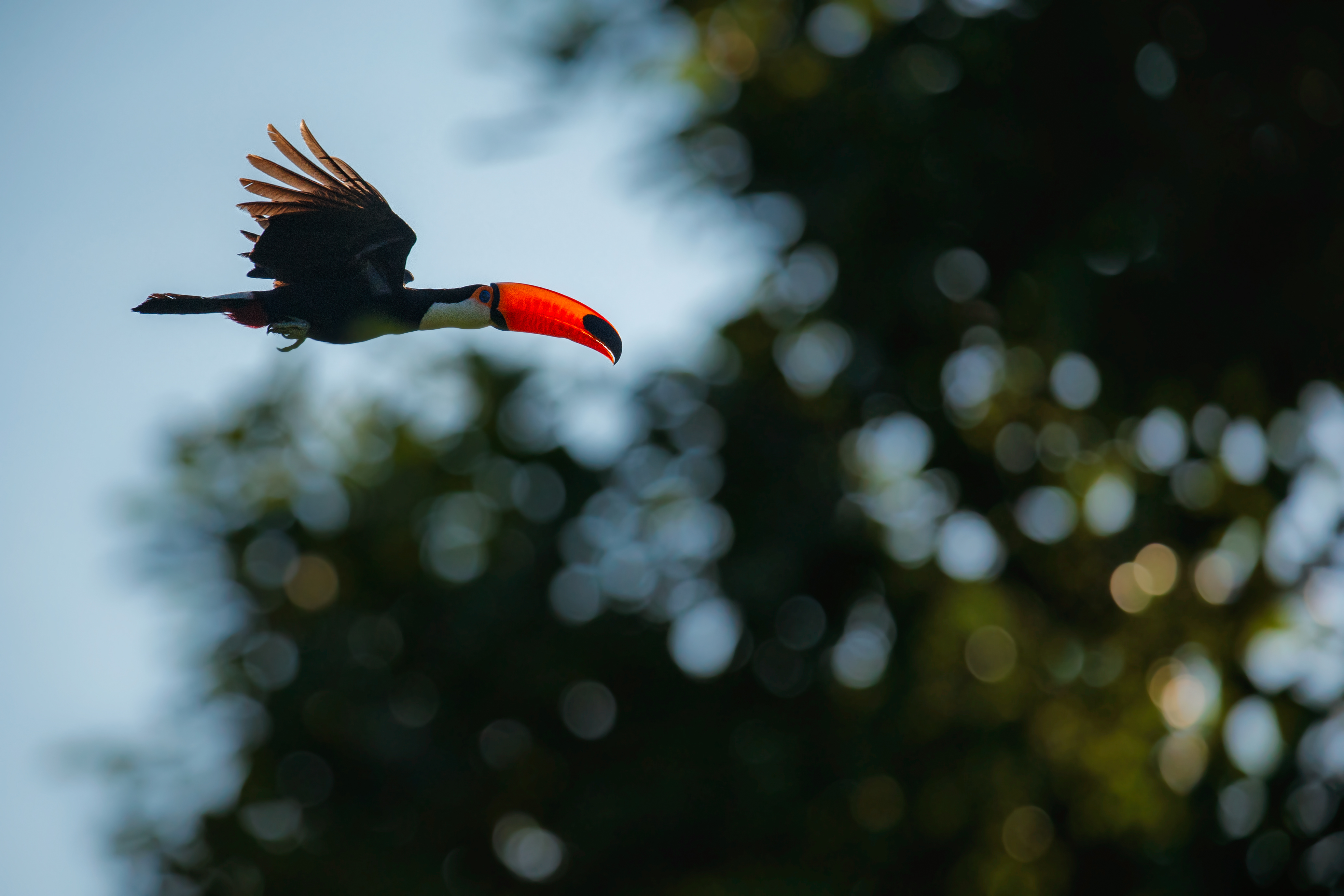
Toco Toucan
Canopy Jewel Ramphastos toco

Toco Toucan (Tucano-toco)

The largest and most iconic toucan in the Americas. Characterized by its oversized, lightweight deep-orange beak tipped with black, bright blue eye rings, and pristine white bib contrasting with glossy black feathers. Their bill functions as an advanced thermoregulatory radiator during hot tropical afternoons.

Diet & Habits Frugivorous foragers feeding on fig trees, cecropia fruits, and palm nuts; occasionally raiding nests for eggs. Usually sighted in lively family trios or pairs gliding across open tree lines.
Prime Sighting Period Year-round, with optimal photogenic canopy behavior in early mornings (6:30 AM to 9:00 AM) and late afternoons.
Key Locations: Eco-lodge gardens, forested gallery ridges, and fruiting acuri palms.
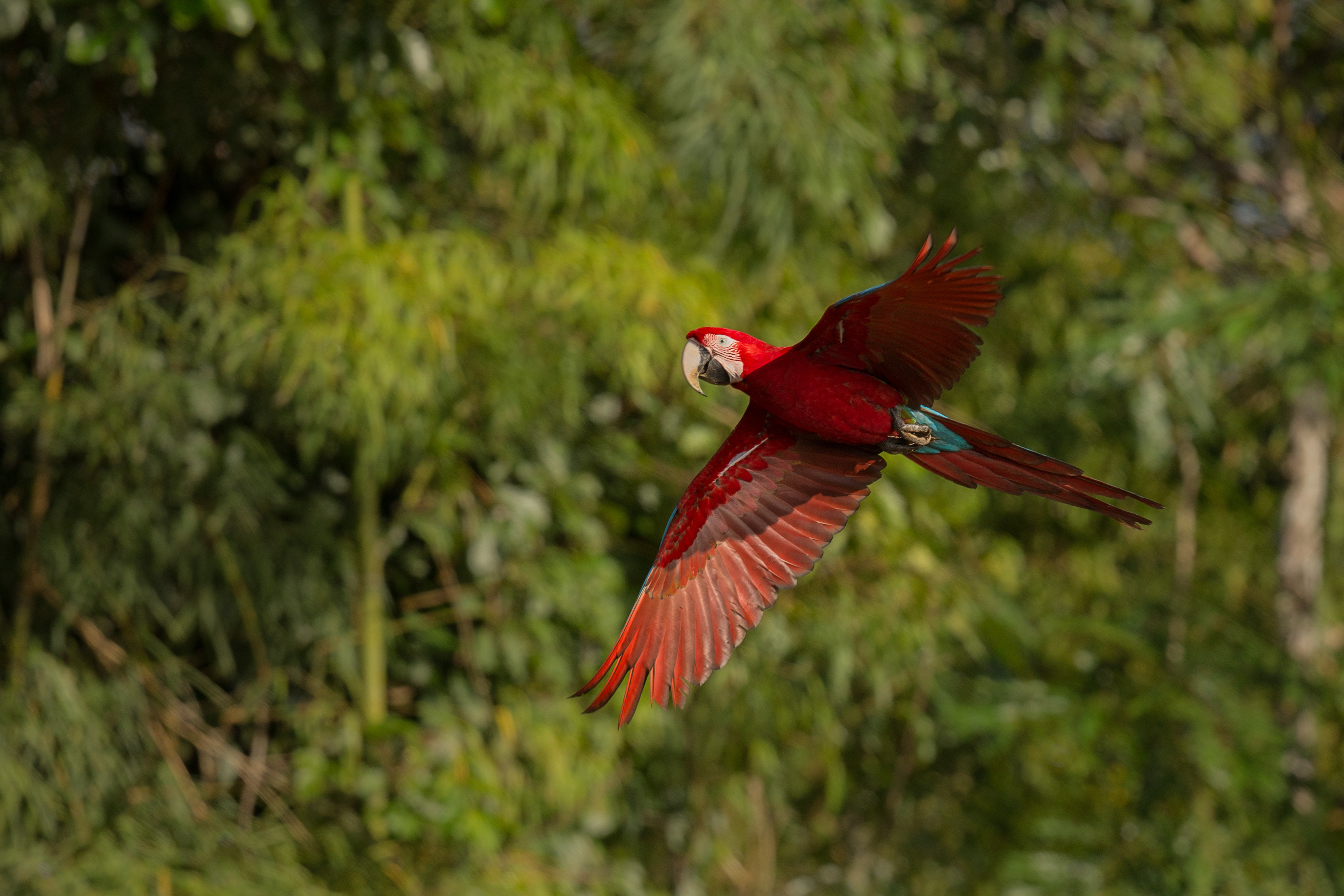
Scarlet Macaw Arara Vermelha
Tropical Masterpiece Ara chloropterus

Red-and-Green Macaw (Arara-vermelha)

Renowned for its vivid crimson plumage, green wing coverts, sky-blue flight feathers, and white bare facial patch laced with delicate red feather lines. Highly intelligent, lifelong-paired birds that produce distinctive resonating guttural calls audible across vast wetland savannas.

Diet & Habits Crushes extremely hard seeds and nuts from native palm trees using a muscular bill capable of exertive force. Nests in natural tree cavities and sandstone cliff crevices.
Prime Sighting Period May through October. Frequent pairs crossing open skies at sunrise and gathering at mineral clay licks.
Key Locations: Chapada dos Guimarães canyons and high palm groves along northern Pantanal ranches.
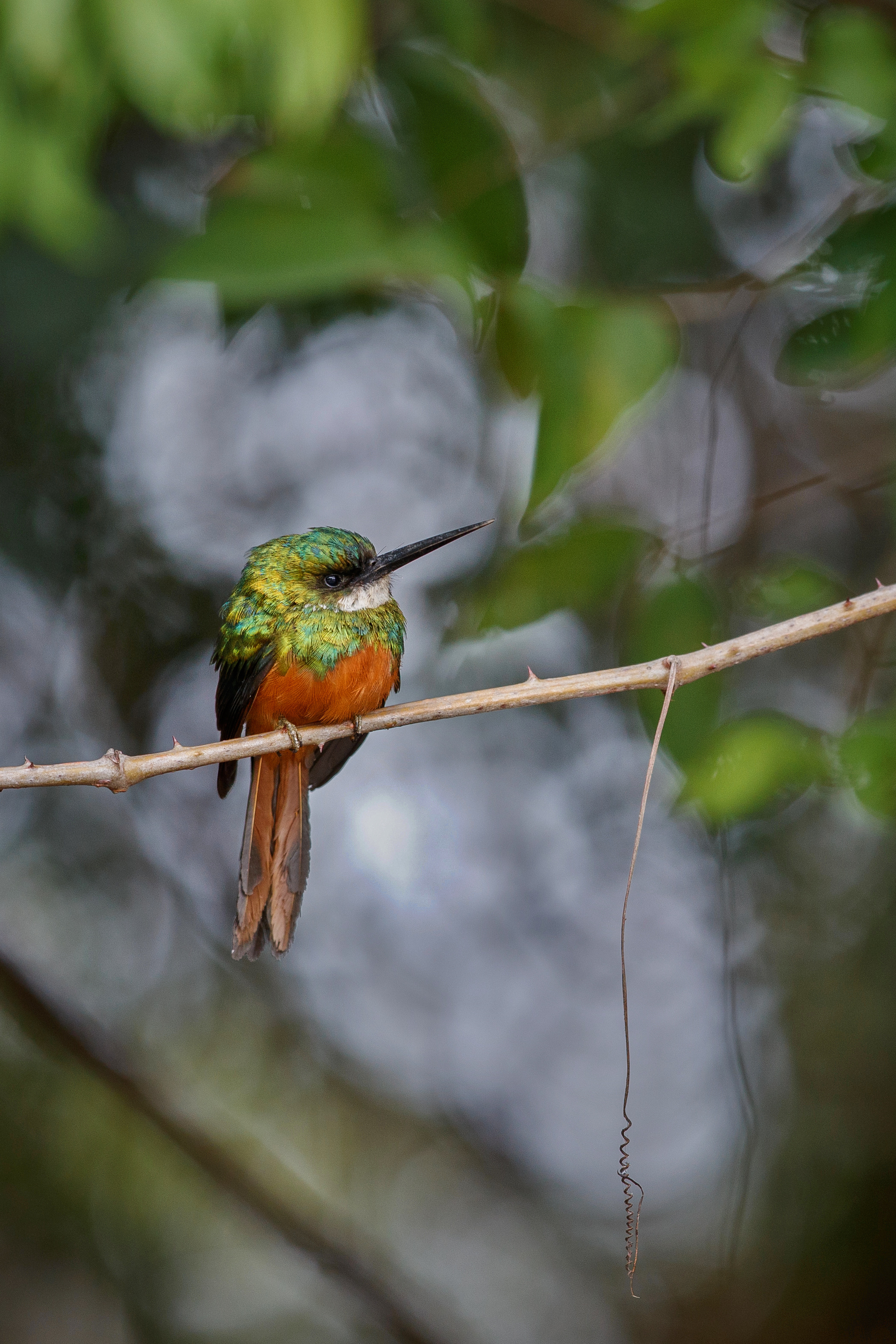
Rufous-tailed Jacamar
Iridescent Forest Hunter Galbula ruficauda

Rufous-tailed Jacamar (Cuitelão)

A shimmering jewel of the mid-story forest. Resembling an oversized hummingbird, the Jacamar boasts metallic emerald-green upperparts, a warm rufous belly, and an elongated needle-thin dagger bill designed for high-speed aerial insect interception.

Diet & Habits Sits motionless on exposed branches before bursting into lightning aerobatics to snap dragonflies, butterflies, and wasps mid-air, returning to the exact perch to eat.
Prime Sighting Period April through November. Readily observed along shaded river trails and low forest clearings.
Key Locations: Gallery forest margins at Rio Claro, Aymara lodge footpaths, and Araras boardwalks.
Ornithologist Calendar

Best Season for Birdwatching

Understanding seasonal water dynamics is critical for maximizing species counts.

The Dry Season

Peak Season

July – October

As floodwaters retreat into isolated lagoons and river channels, millions of fish become trapped in shallow waters. This triggers a massive feeding frenzy, aggregating thousands of herons, egrets, storks, and spoonbills within plain sight.

  • • Ideal weather for walking trails, tower climbs, and boat trips.
  • • High concentration of raptors, kingfishers, and toucans.
  • • Perfect conditions for combined dental treatment and outdoor field photography.

The Green Season

Lush Landscape

December – April

Rainfall transforms the territory into an enormous aquatic sanctuary. While terrestrial access requires 4x4 or specialized motorboats, water hyacinths bloom in profusion and resident species display vibrant courtship displays.

  • • Spectacular displays of resident aquatic birds and singing passerines.
  • • Incredible reflections for sunset photography over flooded plains.
  • • Tranquil eco-lodges with private boat safaris straight from the docks.
Tailored Birding Packages

Restorative Care. World-Class Field Guides.

Toormed pairs specialized English-speaking ornithology naturalists and high-end photographic gear rental with your post-treatment dental downtime in Cuiabá.

Plan My Birding Trip